Your arm aches, your patience is gone, and every walk is a battle. You love your dog, but their relentless pulling makes training feel impossible. Is there a better way?
The best "collar" for training a stubborn dog is often not a collar at all. A well-designed, Y-shaped, front-clip harness is the most effective and humane tool. It redirects a dog's pulling momentum without putting any pressure on their sensitive neck and throat.

As a designer of dog gear, I've spent years analyzing the physics of pulling. A "stubborn" dog is often just a dog that doesn't understand what we want, and the equipment we use can either clarify or confuse our signals. It's not about overpowering your dog; it's about using a tool that allows you to communicate more effectively and safely. Let's look at why the specific design of a tool makes all the difference.
Why is a front-clip harness better than a collar for pulling?
You use a standard collar for control, but the moment your dog pulls ahead, they start gagging and choking. It feels awful for both of you, but nothing else seems to work.
A front-clip harness is better because it changes the point of leverage. When the dog pulls, the leash attached to their chest gently turns their body back toward you. This disrupts the forward-pulling motion without applying any dangerous pressure to their trachea.
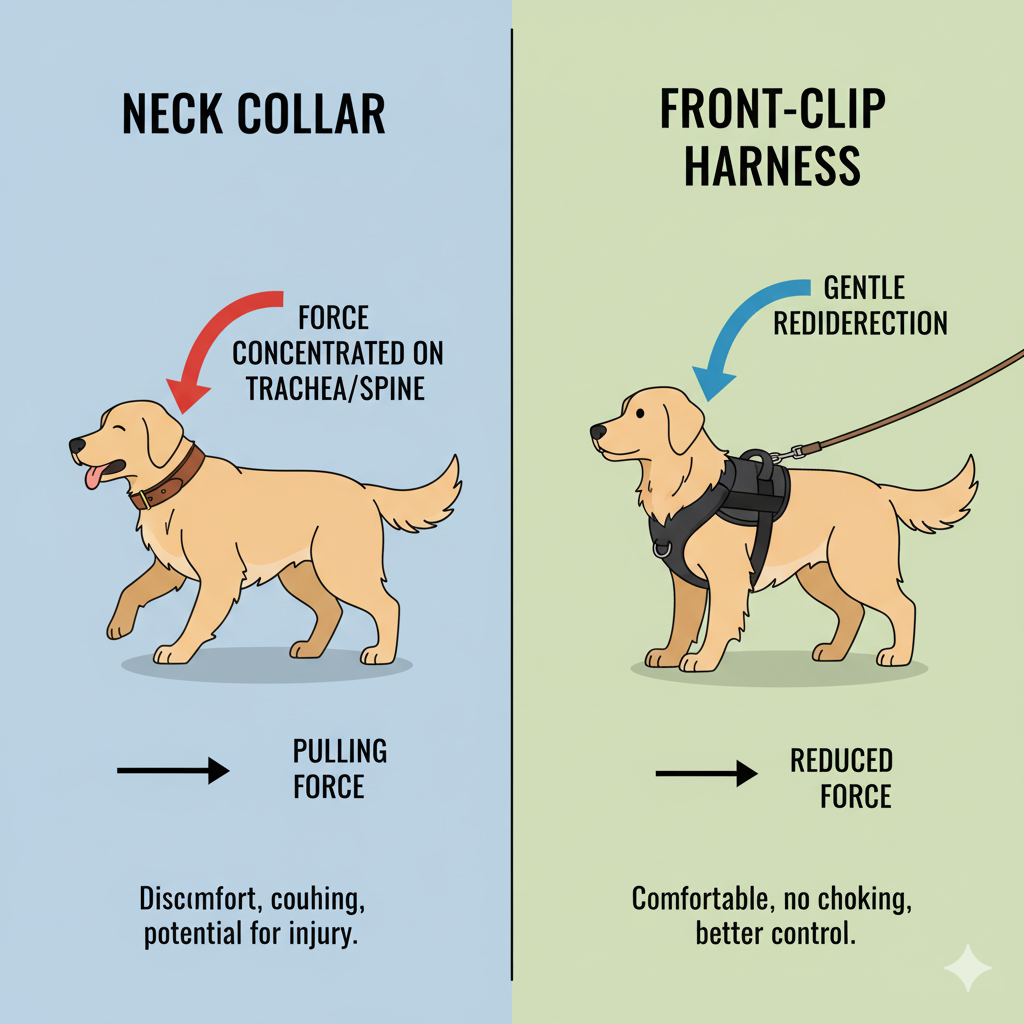
A standard collar often triggers a dog's "opposition reflex." When they feel pressure on the front of their neck, their natural instinct is to pull forward, against that pressure. It becomes a counterproductive cycle of pulling and choking. The design of a front-clip harness brilliantly sidesteps this reflex. It moves the point of control from the neck to the sternum. When I design a harness, the placement of that front D-ring is the most critical element. It has to be positioned on the chest bone so that a pull on the leash turns the dog's core. The harness shape is also vital. A Y-shaped harness allows for full, unrestricted shoulder movement, which is essential for a dog's long-term orthopedic health. Harnesses with a horizontal strap across the shoulders can restrict their natural gait. It’s a perfect example of how smart, humane design can solve a common training problem.
| Feature | Standard Collar | Front-Clip Harness |
|---|---|---|
| Control Point | Neck / Trachea | Sternum / Chest |
| Dog's Reaction | Tends to pull harder against pressure | Forward momentum is redirected sideways |
| Safety Risk | High risk of neck/throat injury | Very low risk when fitted properly |
| Training Effect | Suppresses pulling via discomfort | Teaches that pulling is not effective |
Are Martingale collars a good option for stubborn dogs?
You are looking for a training collar, but the idea of a choke chain feels cruel and outdated. You need something with a bit more control but not at the cost of your dog's safety.
Yes, a Martingale collar is a much safer option for some dogs. It provides a limited and gentle tightening when the dog pulls, which prevents them from backing out of the collar. Crucially, a built-in stop mechanism prevents it from ever becoming a choke collar.
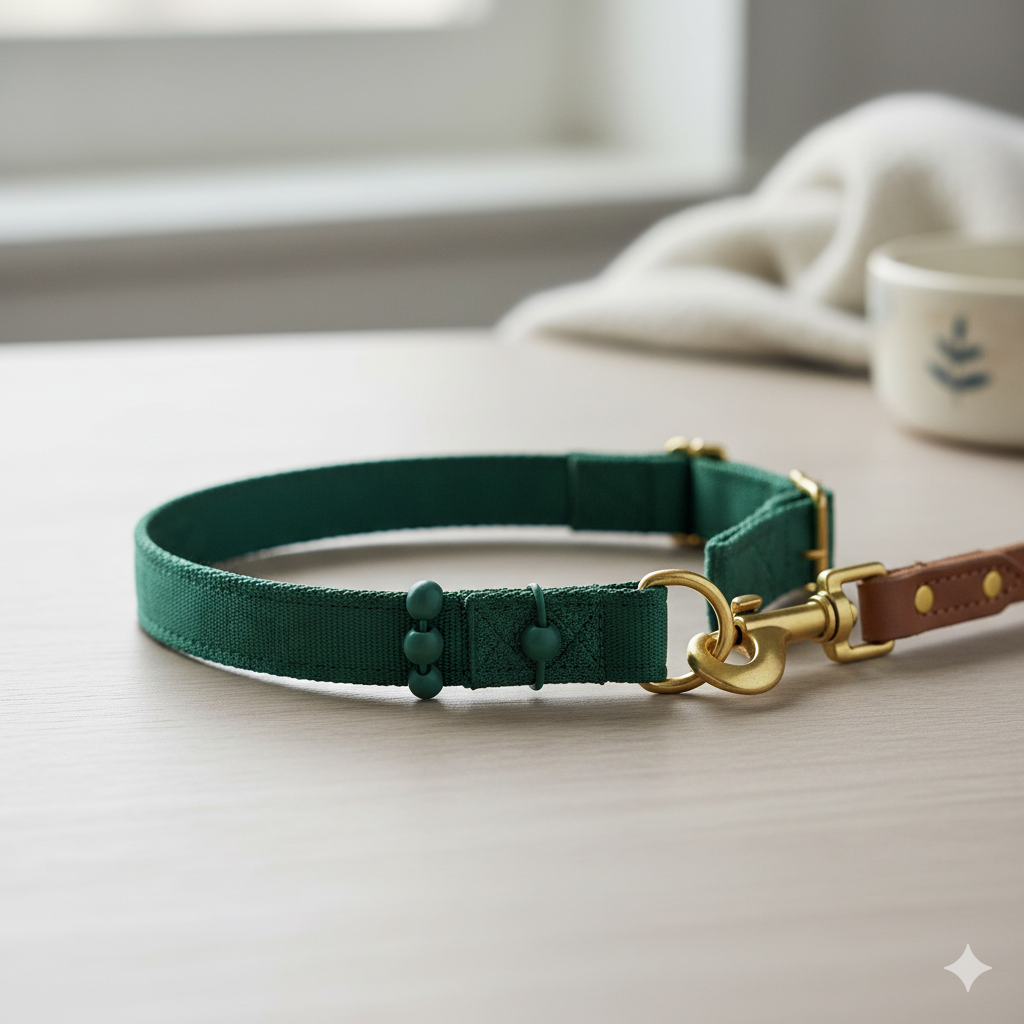
The Martingale collar is a clever piece of engineering. It has a large loop that sits around the dog's neck and a smaller control loop where you clip the leash. When the dog pulls, the tension on the leash pulls the smaller loop taut. This causes the larger loop to tighten evenly around the neck. Here is the key design feature: it can only tighten to a certain point. It provides a clear, audible cue (the sound of the hardware) and a tactile cue (the even pressure) that the dog is pulling. As soon as the dog stops pulling, the collar immediately loosens. This instant feedback is excellent for training. Originally designed for sighthounds, whose slender heads are smaller than their necks, it's a great tool to prevent any dog from dangerously backing out of their collar. When looking at the design, I always check for durable nylon and welded D-rings that won't separate under pressure. A Martingale is a communication tool, not a punishment device.
What collars should you absolutely avoid for training?
You've seen some professional trainers using certain collars, so they must work, right? But something about them seems harsh, and you worry about the potential physical and psychological harm.
You should absolutely avoid aversive collars like choke chains and prong (or pinch) collars. These tools are designed to work by causing pain and discomfort. They can severely damage a dog's trachea, create fear-based anxiety, and irreparably damage the trust between you and your dog.
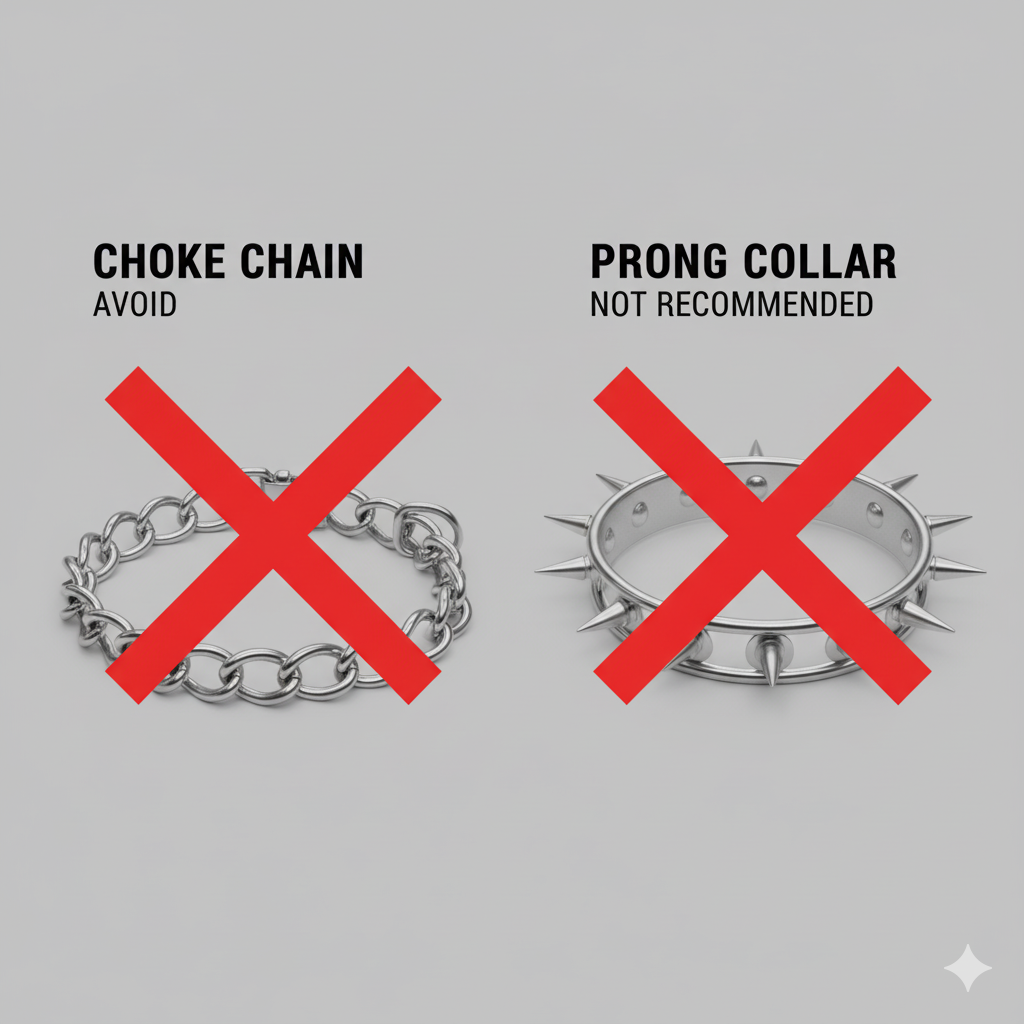
My product design philosophy is rooted in humane principles that enhance the bond between people and their pets. Aversive tools do the opposite. Let's be clear about how these are designed to function.
Choke Chains
This is a simple chain loop with no safety stop. Its design allows for unlimited constriction around a dog's neck. The potential for injury is immense: tracheal collapse, esophageal damage, and spinal cord injuries are all well-documented risks. From both a safety and engineering standpoint, it is a dangerously flawed design.
Prong Collars
These collars work by applying pressure from blunt metal prongs into the dog's neck. They operate on the principle of pain compliance. A major risk is the psychological damage. A dog can easily associate the sudden pain from a "correction" with something in the environment—like a child, or another dog—creating new fear and aggression problems.
These tools suppress behavior out of fear. They don't teach a dog what you want them to do instead. Modern training methods, combined with well-designed tools like front-clip harnesses, make these outdated, aversive tools completely unnecessary.
Conclusion
The best tool for training a "stubborn" dog is one that fosters clear communication. A front-clip harness is the safest, most effective choice. Prioritize teaching your dog, not correcting them.

Cindy Long is the Sales Manager of Raysunpets and a pet lover with over 12 years of experience in exporting pet products. She specializes in providing customized dog chest carriers, leashes and pet accessory solutions for the European and American markets, always focusing on the real needs of customers and pets, and is committed to creating high-quality, practical and comfortable products that allow fur kids to live happier lives.