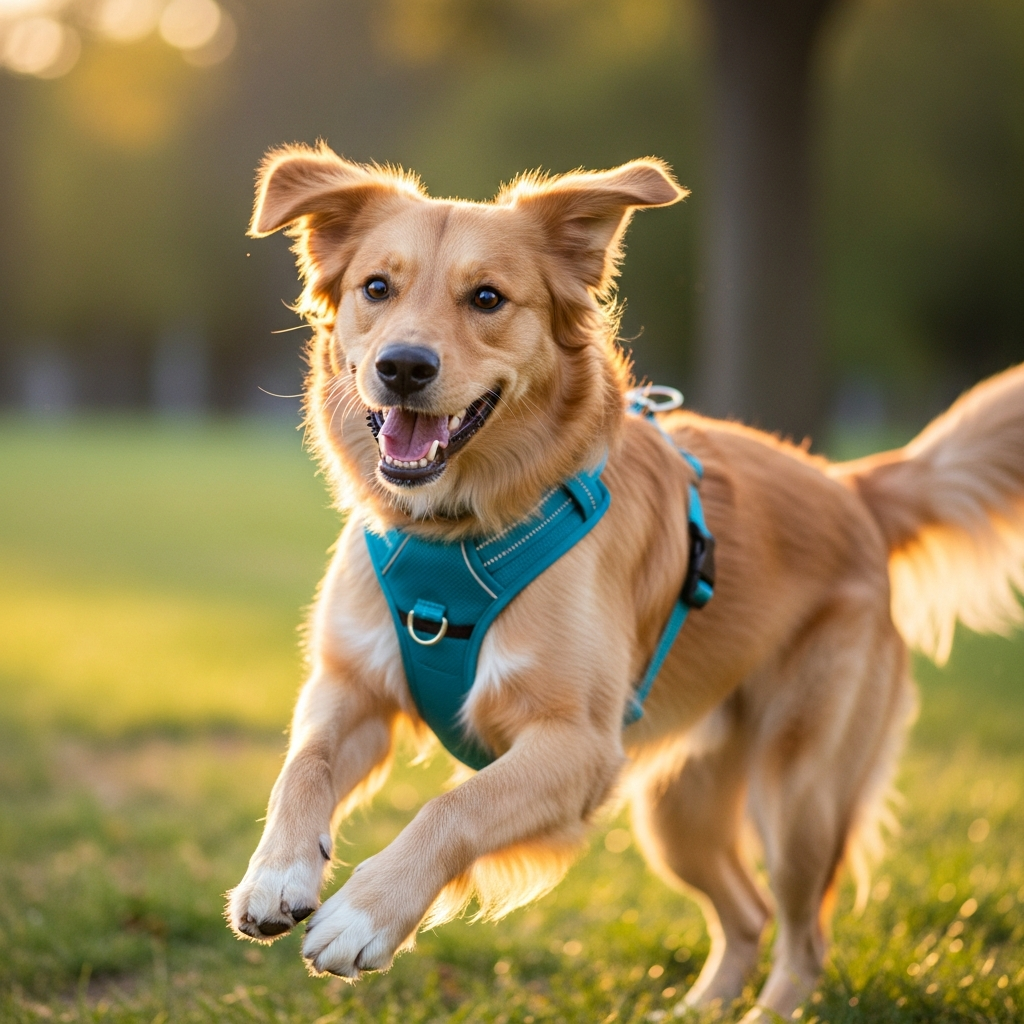
Tired of your dog pulling on walks? It makes strolls frustrating. The right no-pull harness uses smart design to give you back control and make walks fun.
Effective no-pull harnesses feature a front D-ring attachment point on the chest. When the dog pulls, this design gently steers them back towards you, redirecting their forward momentum. This discourages pulling without causing pain or choking, making it a humane training tool.
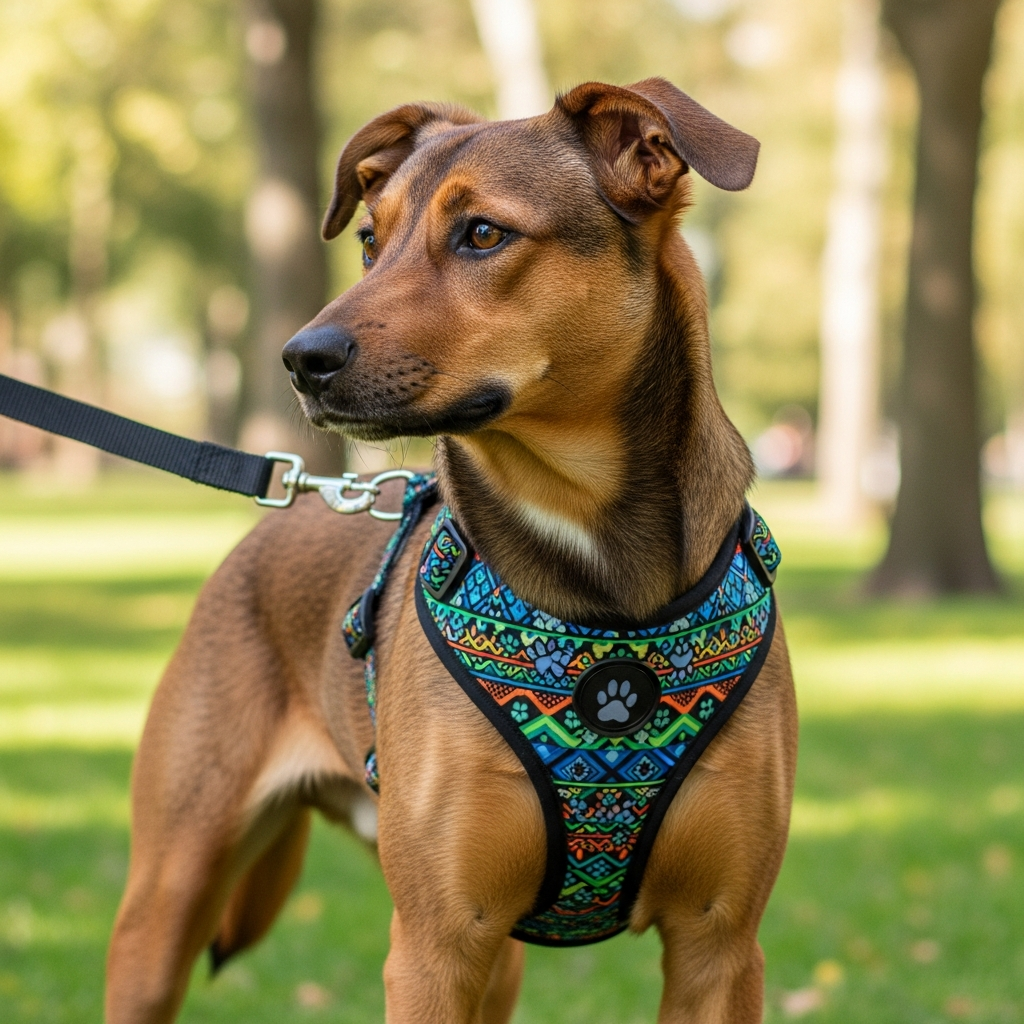
Knowing the most effective type is a great start. But as a product designer in the pet industry, I’ve learned that the why is more important than the what. Understanding the mechanics behind how these harnesses function is the real key to choosing the perfect one for your dog and making your walks better. So, let’s look at the design logic.
How Do No-Pull Harnesses Actually Work?
You see "no-pull" on the label, but it seems like a gimmick. How can a simple piece of fabric really stop a powerful, determined dog from pulling?
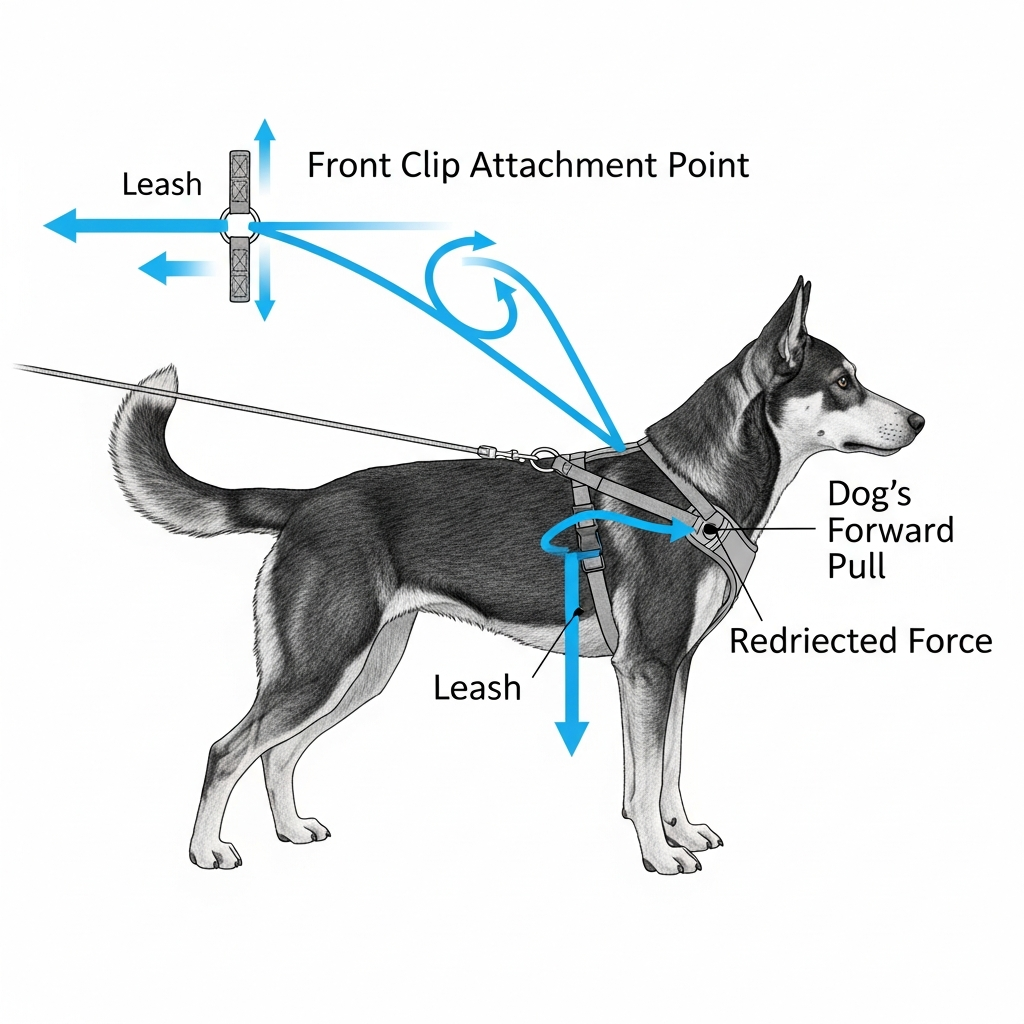
It works by redirecting your dog's center of gravity. When the leash is attached to the front clip on their chest, pulling forward causes them to pivot back toward you. This makes pulling an inefficient way for them to move forward, so they quickly learn to walk politely.
During my time consulting for pet brands, I helped develop several no-pull harnesses. The core principle we always focused on was leverage, not restriction. Traditional collars and back-clip harnesses place the pulling force at the strongest points of a dog's body—their neck and back. This actually engages their "opposition reflex," causing them to pull even harder, just like sled dogs are taught to do.
The Physics of Redirection
A front-clip harness changes the entire dynamic. The leash attachment point is at the dog’s chest, which is their center of gravity.
- Force Applied: The dog surges forward.
- Leash Tightens: The tension is applied to the D-ring on their chest.
- Resulting Motion: Instead of moving forward, the dog's body is gently turned to the side or back towards the handler.
This process is not painful. It simply makes the act of pulling counterproductive. The dog wants to go forward, but pulling only turns them around. Over time, they associate a loose leash with moving forward and a tight leash with an annoying pivot. This is a fundamental concept in humane dog training and effective product design. It works with the dog's body mechanics, not against them.
Are Front-Clip Harnesses Better Than Back-Clip Harnesses for Pulling?
You see harnesses with clips on the back, front, or both. For a dog that pulls, you might wonder if the clip's location really makes that much difference.
Yes, for stopping pulling, front-clip harnesses are significantly better. Back-clip harnesses can encourage pulling by allowing the dog to use their full body weight against the leash. Front-clip designs give you steering control and discourage the pulling behavior from the start.
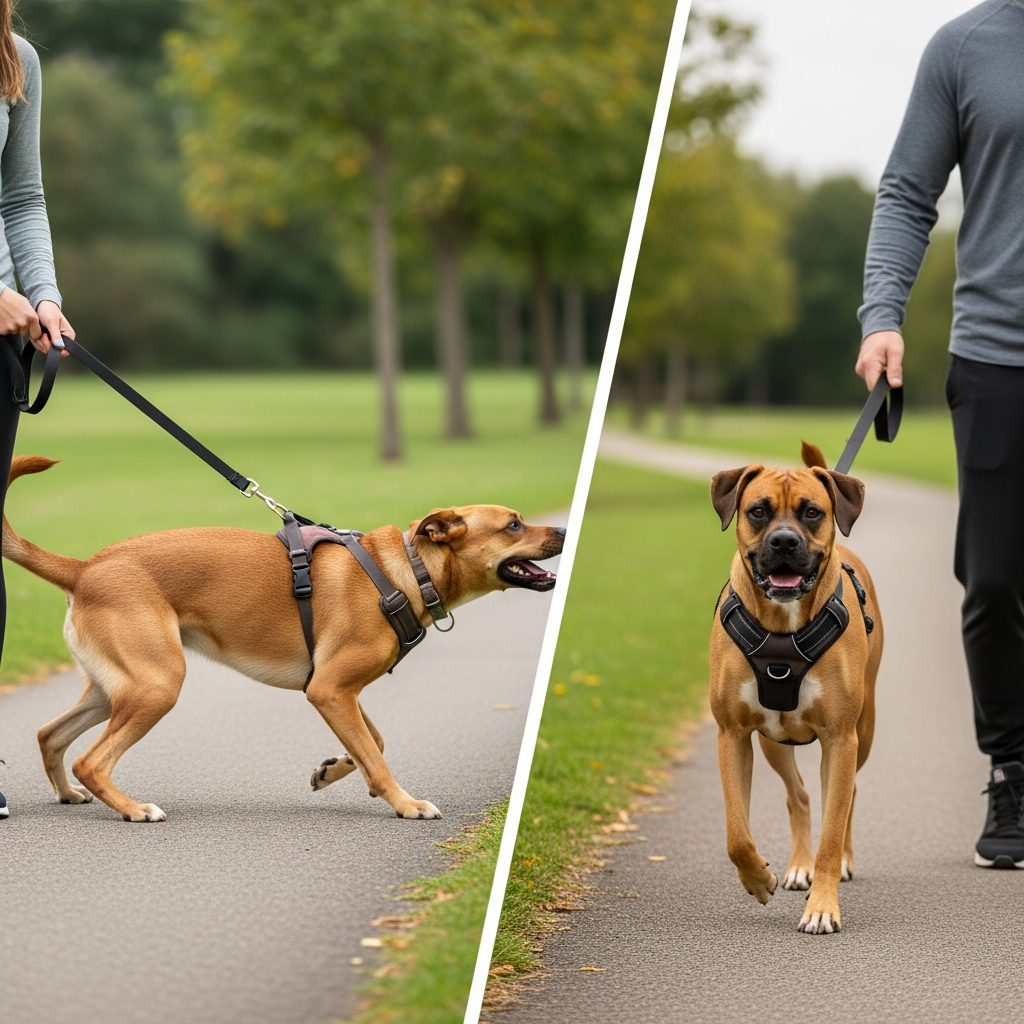
The debate between front-clip and back-clip designs is something I deal with constantly. From a design and manufacturing standpoint, each has its purpose, but they solve very different problems. A back-clip harness is excellent for dogs that are already trained to walk on a loose leash. It keeps the leash out of the way and is very comfortable for casual strolls. However, it's not a training tool for pullers.
A Tool for Every Job
Think of it this way: you wouldn't use a hammer to turn a screw. Both are useful tools, but for different tasks. A back-clip harness gives the dog maximum leverage to pull, which is why they are used for sports like canicross or skijoring. A front-clip harness is specifically designed to remove that leverage.
Many modern designs, which I often recommend, are dual-clip harnesses. They offer the best of both worlds.
- Training Mode: Use the front clip to teach loose-leash walking.
- Relaxed Mode: Use the back clip once the dog walks politely.
- Maximum Control: Use a double-ended leash attached to both clips for dogs that need extra guidance.
| Harness Type | Best for Pulling Control? | Primary Use Case |
|---|---|---|
| Front-Clip | Excellent | Training dogs not to pull. |
| Back-Clip | Poor | Well-behaved walkers, canine sports. |
| Dual-Clip | Excellent | Versatile training and walking. |
| Collar | Poor | Holding ID tags; can cause neck injury from pulling. |
What Materials Make the Best No-Pull Harnesses?
You want a harness that works, but it also has to be durable and comfortable. The material it's made from can make or break the entire experience for your dog.
The best no-pull harnesses use durable, non-abrasive materials like nylon or polyester webbing for the straps. They should also feature padded sections made from neoprene or breathable mesh around the chest and back to prevent chafing and ensure comfort during long walks.
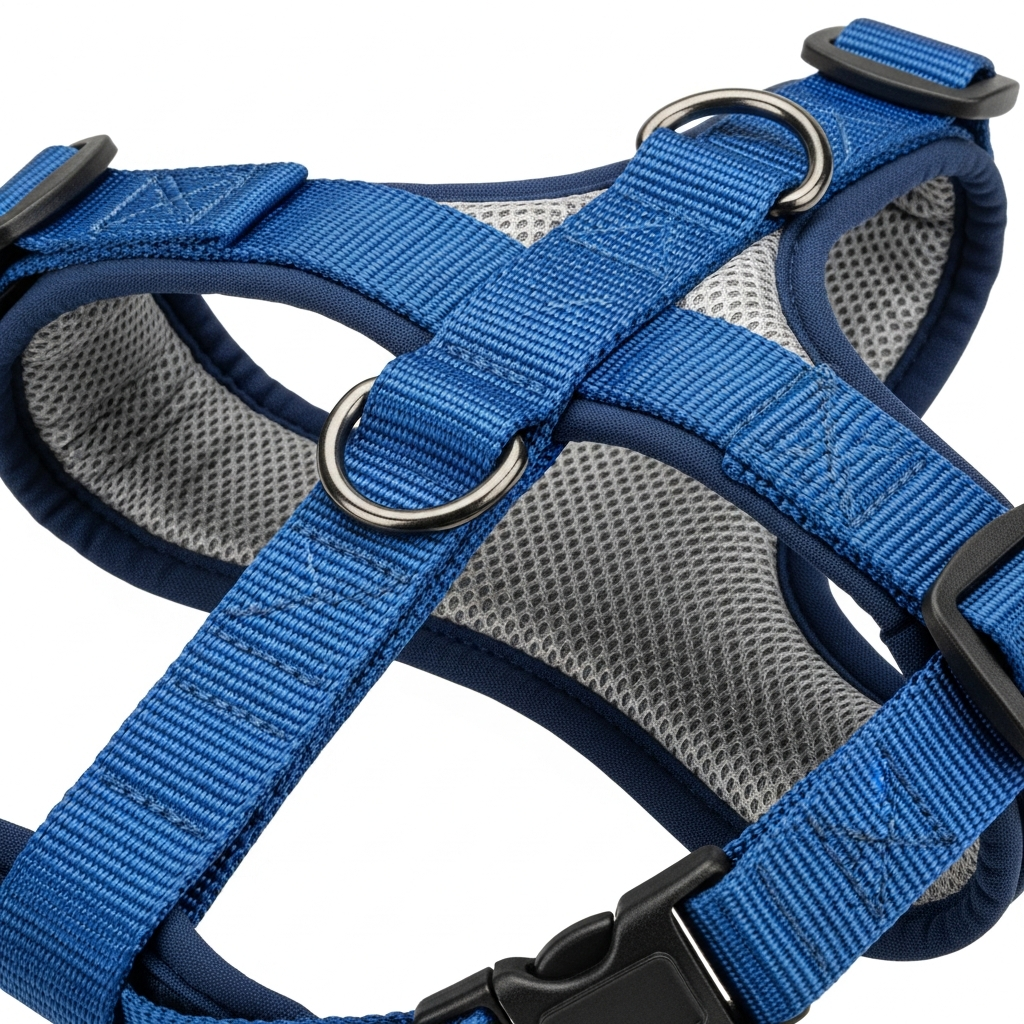
As a designer, material selection is one of the most critical stages. The wrong material can turn a great design into a product that fails or even harms a dog. For a no-pull harness, we need to balance three key factors: strength, comfort, and longevity. The straps do the heavy lifting, so they need to have a high tensile strength to withstand a powerful lunge.
Core Component Breakdown
This is how I approach the material specification for a new harness design:
- Webbing (The Straps): I almost always start with high-density nylon or polyester webbing. Nylon is incredibly strong and has a bit of give, while polyester offers superior UV resistance and doesn't stretch when wet.
- Padding (The Comfort Layer): This is crucial for front-clip harnesses, as the chest plate is a key point of contact. Neoprene is a fantastic choice because it's soft, water-resistant, and durable. Breathable air mesh is another great option, especially for dogs in warmer climates, as it promotes airflow.
- Hardware (The Buckles & D-rings): I never cut corners here. For D-rings, welded steel or aviation aluminum provides the best security. For buckles, I look for high-quality, cold-resistant plastic from trusted suppliers like Duraflex to ensure they won't become brittle and snap in the winter.
A well-made harness is a sum of its parts. Every stitch, every piece of hardware, and every panel of fabric must work together to create a tool that is safe, effective, and comfortable for the dog.
Conclusion
Effective no-pull harnesses use front-clip technology to provide gentle steering. Choosing one with durable, comfortable materials ensures a better walking experience for both you and your dog.

Cindy Long is the Sales Manager of Raysunpets and a pet lover with over 12 years of experience in exporting pet products. She specializes in providing customized dog chest carriers, leashes and pet accessory solutions for the European and American markets, always focusing on the real needs of customers and pets, and is committed to creating high-quality, practical and comfortable products that allow fur kids to live happier lives.