You dread walks because your dog pulls you down the street. It’s exhausting and frustrating, turning what should be a joy into a daily battle of wills.
To train a dog to walk on a leash, start by creating a positive association with a well-fitted harness and leash. Keep initial sessions short, use high-value treats to reward loose-leash walking, and be consistent. Using a front-clip harness can humanely manage and correct pulling.
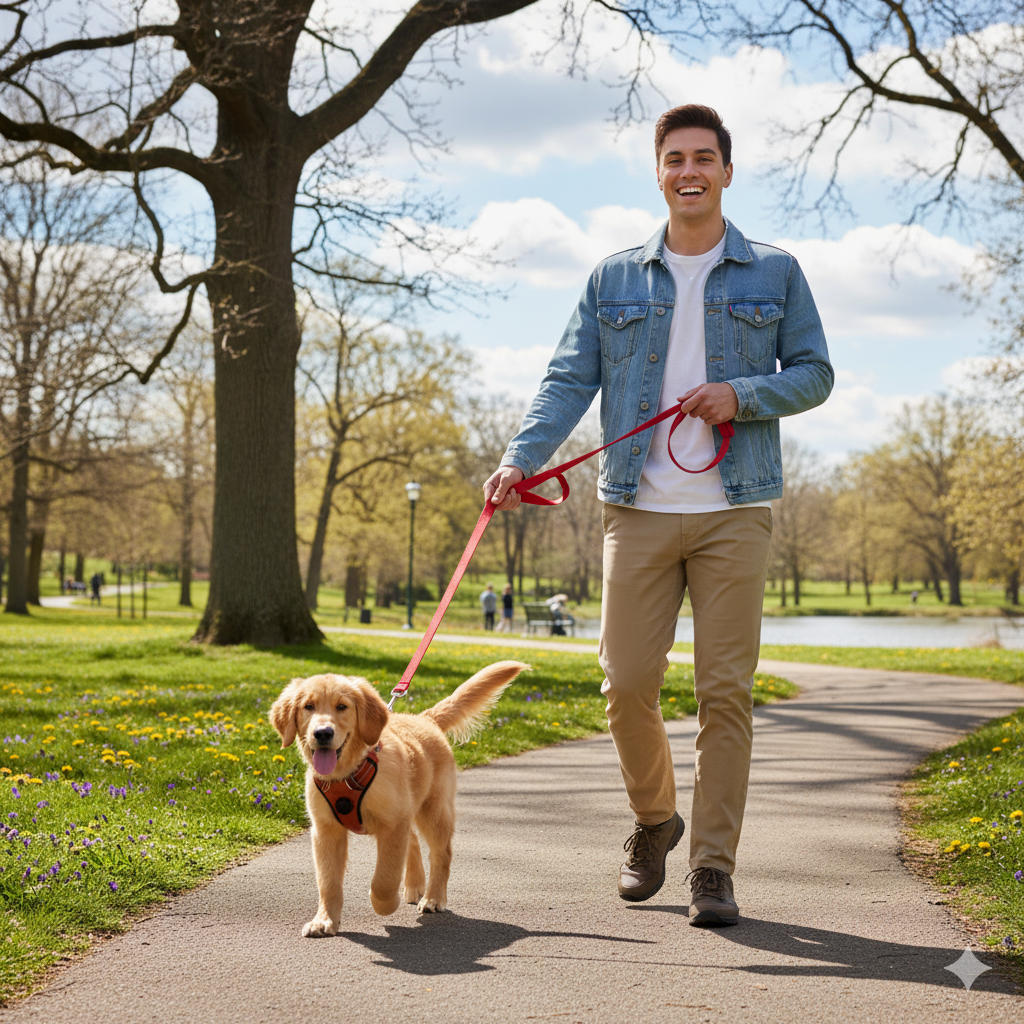
As a designer of dog gear, I’ve seen how the right equipment can completely change the dynamic between a person and their dog. But the gear is only half the story. The other half is about patience, understanding your dog's perspective, and turning training into a positive game. You’re not just teaching them to walk; you’re building a foundation of communication that will last a lifetime.
What equipment is best for starting leash training?
The pet store aisle is overwhelming with collars, harnesses, and leashes. Choosing the wrong one can make training harder, cause your dog discomfort, or even be dangerous.
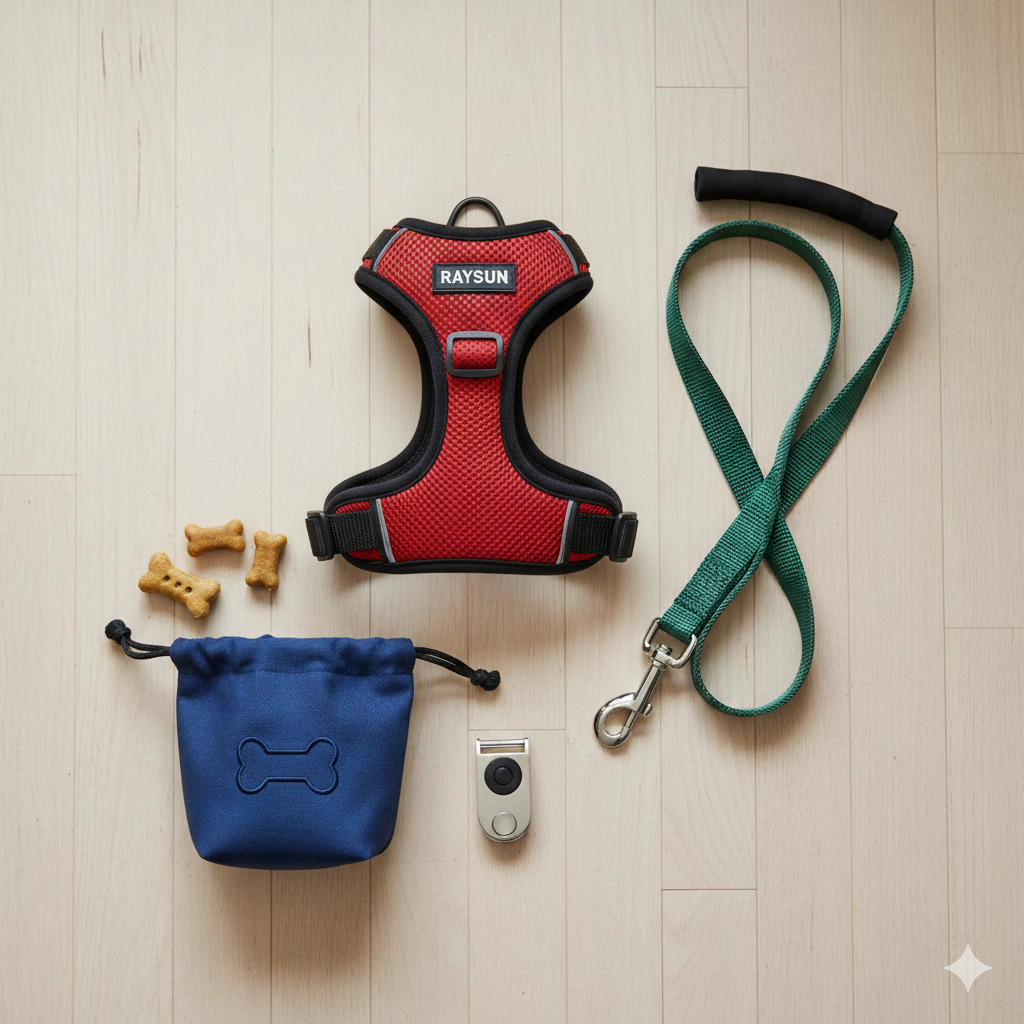
The best equipment is a Y-shaped harness with both front and back clips, paired with a standard 6-foot non-retractable leash. This setup offers the most humane control, prevents neck injury, and gives you the flexibility to adapt your training as your puppy learns.
In my design consultancy, I always steer clients towards products that solve problems safely and effectively. For leash training, a collar is often the wrong tool for the job.
Why a Harness Beats a Collar for Training
A collar puts pressure directly on a dog's throat. When a dog pulls against a collar, it can trigger something called an opposition reflex, where they instinctively pull harder against the pressure. This creates a cycle of pulling, choking, and frustration. More importantly, it puts your dog at risk for tracheal damage, neck strain, and other serious injuries. A harness, by contrast, distributes that pressure safely across the chest and torso.
The Design of a Great Training Harness
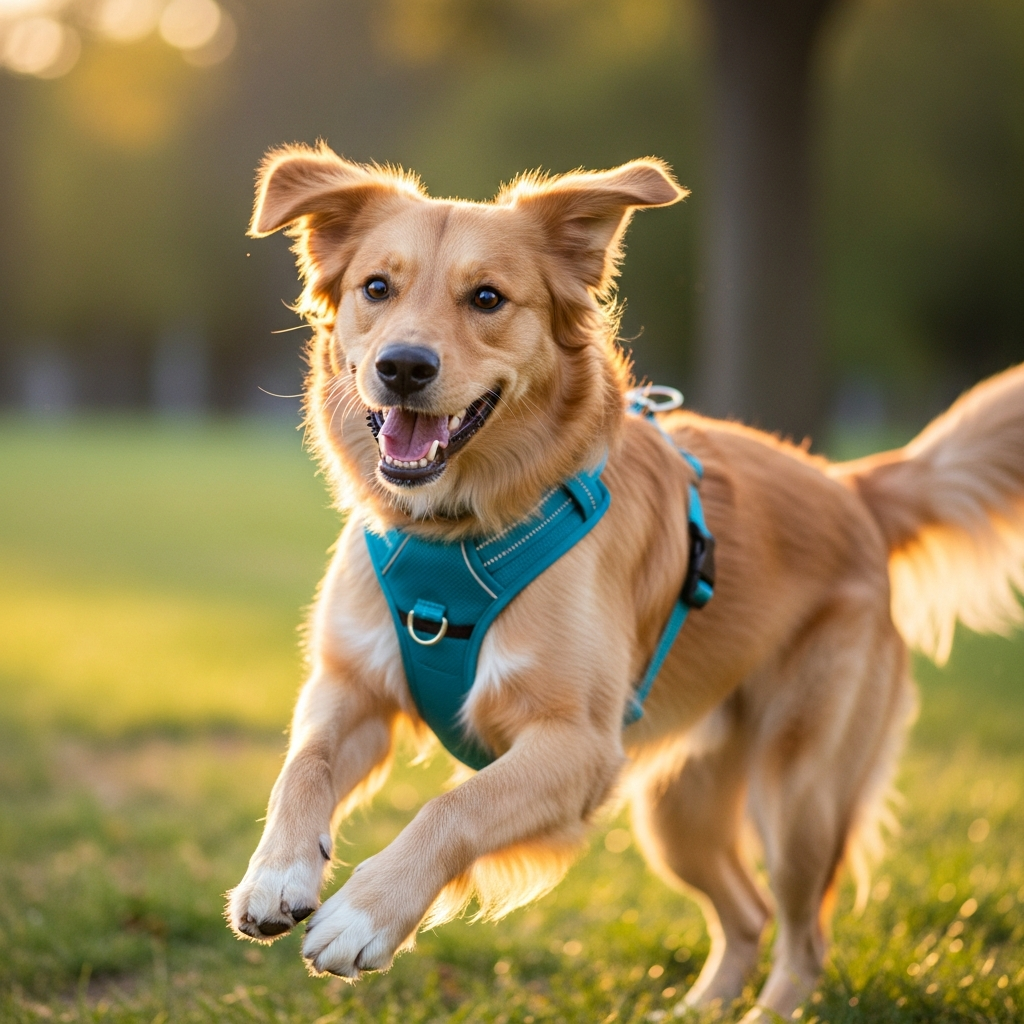
The best harness design is a "Y-shape" that sits on the dog's chest and around their ribcage. This allows for complete freedom of shoulder movement, which is critical for their natural gait. I strongly recommend avoiding harnesses with a horizontal strap that cuts across the dog's shoulders, as this can restrict movement and cause long-term issues. A dual-clip harness is the gold standard for training. The back clip is for relaxed walks once your dog is trained, while the front clip is your secret weapon. It redirects a pulling dog’s momentum, turning them gently back towards you and teaching them that pulling doesn't get them where they want to go.
| Tool | Primary Use | Training Pros & Cons |
|---|---|---|
| Standard Collar | ID Tags, trained walks | Cons: Can cause injury, encourages pulling |
| Front-Clip Harness | Leash Training, Pullers | Pros: Safe, humane, effective for teaching |
| Retractable Leash | Not recommended | Cons: Teaches pulling, poor control, unsafe |
How do you introduce the leash and harness for the first time?
Your puppy sees the new harness and runs and hides. Trying to put it on becomes a stressful wrestling match, creating a bad first impression that sours future walks.
Introduce the equipment slowly and positively indoors. Let your dog sniff the harness and leash, rewarding them with treats. Practice putting the harness on for just a few seconds at a time, immediately followed by a high-value reward, before they have a chance to get stressed.
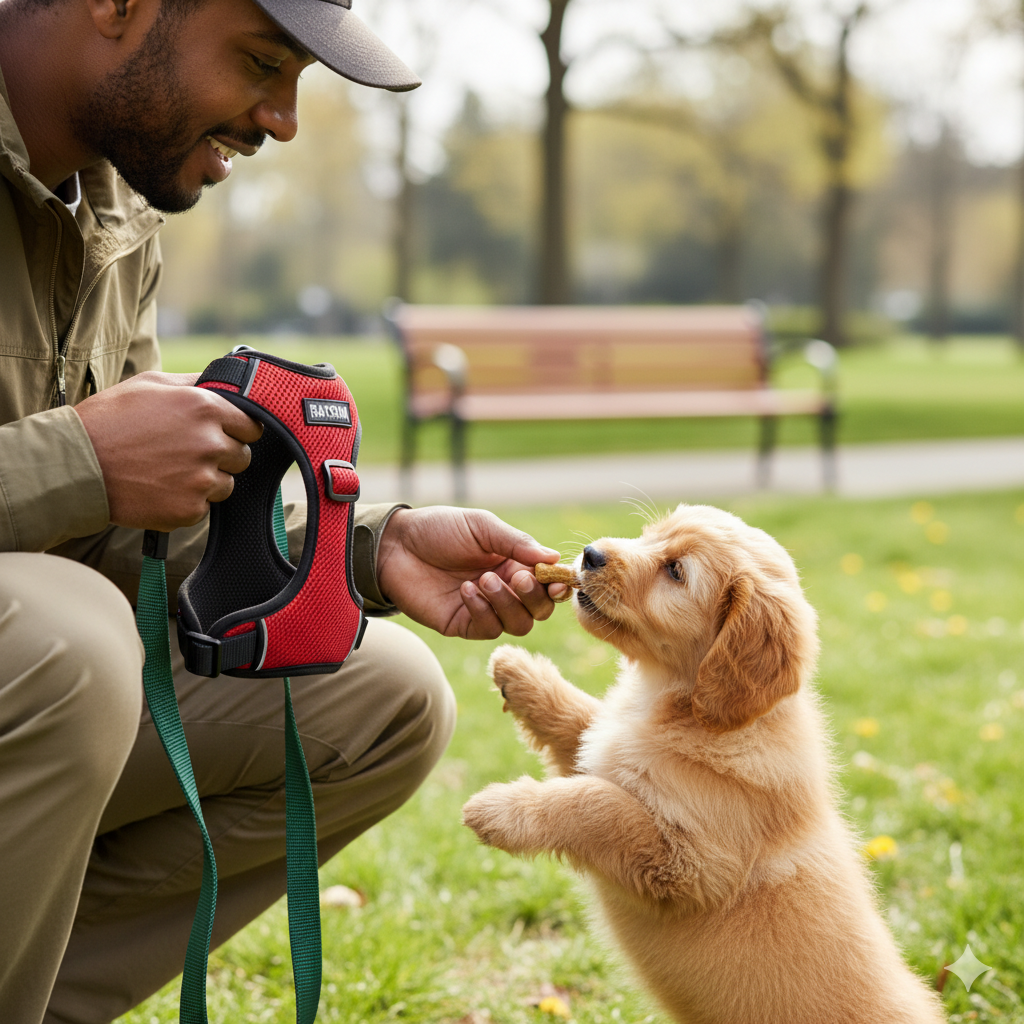
A product's "user experience" applies to dogs, too. Their first interaction with a new product, like a harness, needs to be a good one. You want them to think "Harness means fun things are about to happen!" not "Oh no, that annoying thing again." Don't just clip it on and head outside. You have to build a positive association first.
Step 1: The Sniff Test
Leave the new harness and leash on the floor. Let your puppy investigate it on its own terms. Casually drop some small, tasty treats on and around it. Let them eat the treats and walk away. Repeat this a few times over a day or two.
Step 2: Touch and Treat
Once they are comfortable around the gear, pick up the harness. Gently touch it to your puppy's back, then immediately give them a treat. Touch it to their chest, give a treat. The goal is to desensitize them to the feel of it.
Step 3: Buckle Up for Fun
Hold the harness open and lure your dog's head through with a treat. Give them lots of praise. Then take it off. Next, try putting it on and buckling it. The second the buckle clicks, give them a jackpot of amazing treats or start their favorite game. Leave it on for only 30 seconds, then take it off and end the session on a high note. Gradually increase the time they wear it around the house.
What are the first steps for walking outside?
The moment you step outside, your puppy is overwhelmed. They pull frantically toward every leaf, smell, and sound, completely ignoring you and turning the walk into a chaotic tug-of-war.
Keep initial outdoor walks extremely short, five to ten minutes at most. Start in a low-distraction environment like your backyard. Reward your puppy with a high-value treat every time they look at you or walk beside you with a slack leash.
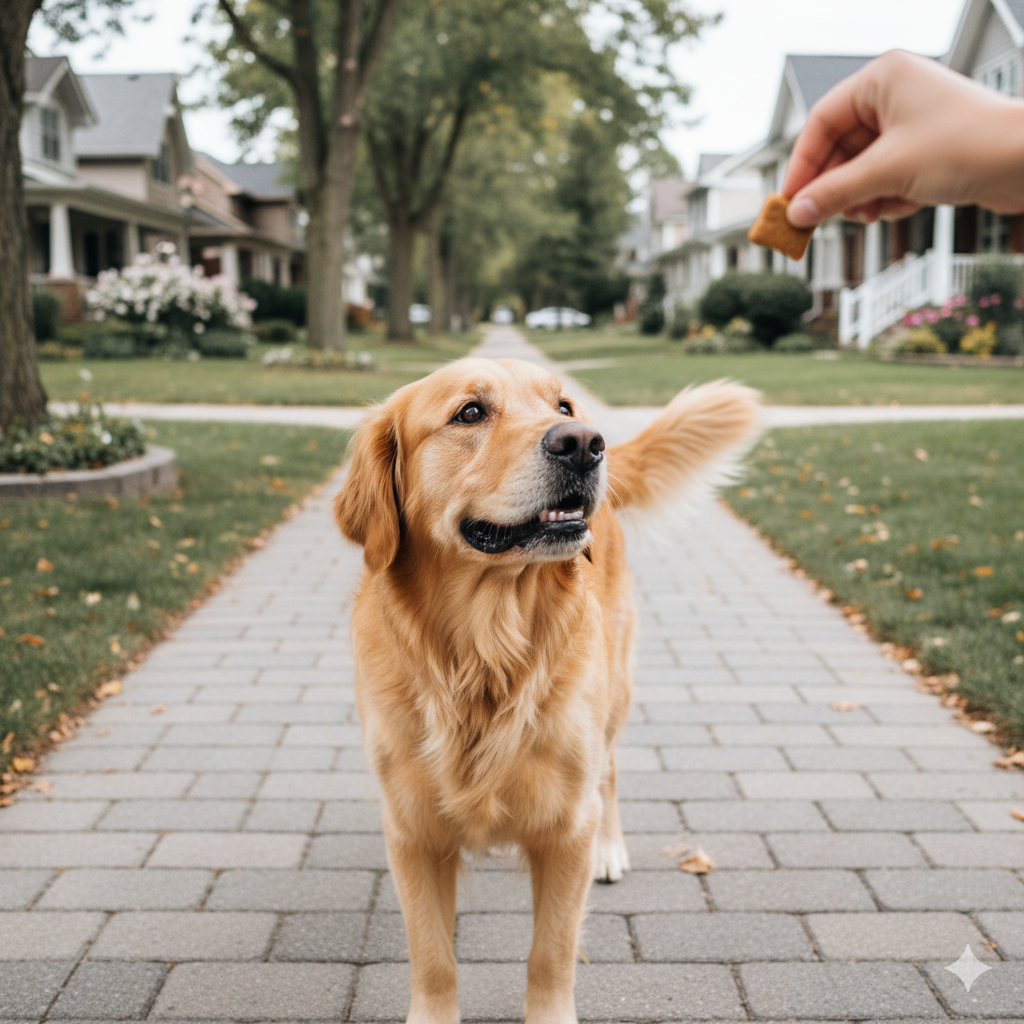
The outside world is incredibly stimulating. You have to be more interesting than a squirrel or another dog. This is where your technique becomes more important than the equipment.
Rewarding Attention and Position
Clip the leash to the front clip of the harness. As you walk, any time your puppy looks up at you, say "Yes!" in a happy voice and immediately give them a treat. Do the same for any time they are walking nicely by your side. At first, you will be giving a lot of treats. That is okay. You are teaching them that being near you and paying attention to you is the most rewarding thing they can do.
The "Be a Tree" Method
This is a simple but powerful technique. The moment your puppy pulls and the leash goes tight, you immediately stop walking. Become completely still and boring, like a tree. Don't pull back on the leash; just hold your ground. The instant the puppy turns back to look at you and the leash goes slack, say "Yes!" and start walking again. They will quickly learn a very simple rule: Pulling stops the walk, but a loose leash makes the walk happen. This is clear, non-verbal communication they can understand. Consistency is everything. Every single person who walks the dog must use the same rules.
Conclusion
Leash training requires patience, consistency, and the right tools. By focusing on positive reinforcement, you can teach your dog that walking with you on a loose leash is a rewarding partnership.

Cindy Long is the Sales Manager of Raysunpets and a pet lover with over 12 years of experience in exporting pet products. She specializes in providing customized dog chest carriers, leashes and pet accessory solutions for the European and American markets, always focusing on the real needs of customers and pets, and is committed to creating high-quality, practical and comfortable products that allow fur kids to live happier lives.